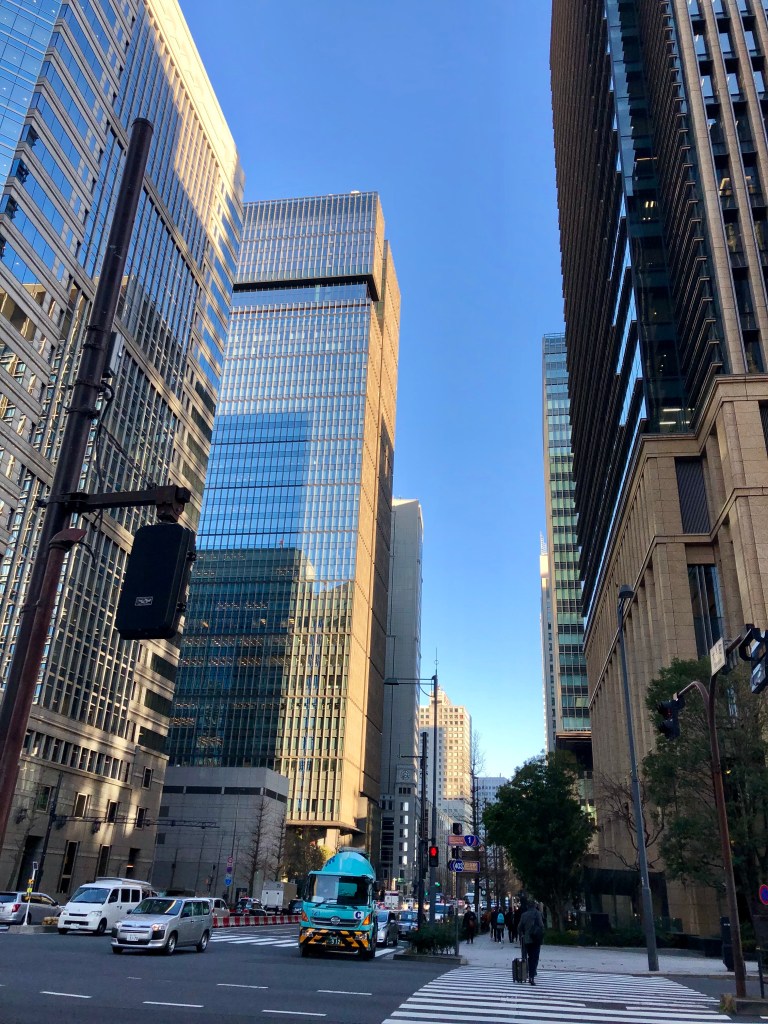
Fie-Trude, a pragmatic European with a passion for rice crackers and neatly organized spreadsheets, was sitting on the 12th floor of Hotel The Evening in Tokyo. She was sipping her green tea (quietly improved with a sugar cube) when the room suddenly began to sway — like she was riding a badly balanced washing machine on spin cycle.
Her teacup rattled, the bed gently rocked, and the laundry she’d hung up began swinging like cherry blossoms in a spring breeze. “Are those my socks or wind chimes?” she muttered, clinging to the wall.
In a mini panic, she grabbed her iPad and quickly typed: “What to do during an earthquake?”
First result:
“Do what the locals do.”
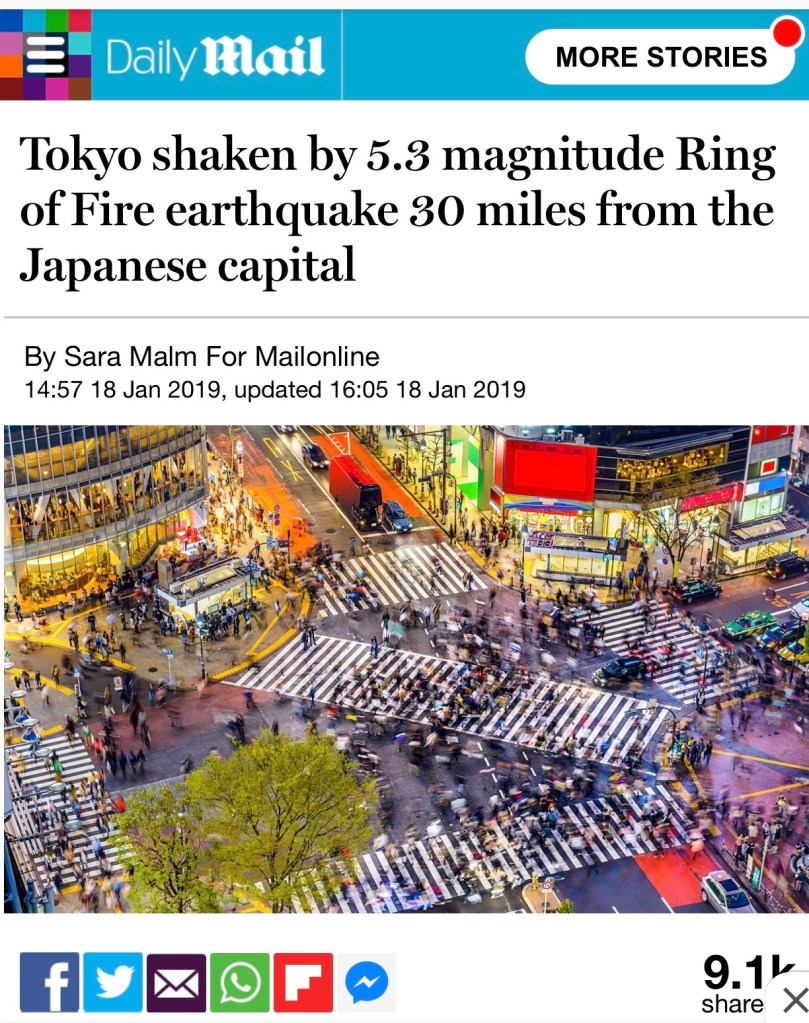
She peeked out the window. Across the street, an elderly Japanese lady stood calmly on her balcony, bowing politely to her bonsai tree. As if to say: “Ah yes, magnitude 5. How charming.”
Fie-Trude stared at her screen, then at the woman, then back at the screen. Seriously? That’s it?
Meanwhile, she had already packed her essentials: phone, passport, toothbrush, and a Mars bar wrapped in silver foil. Ready to dash — to the lobby or the airport, whichever came first.
She called the front desk:
“Um… I think everything is… moving? The bed, the walls, my entire nervous system?”
The receptionist replied, calm as ever:
“Hai, hai. Just small jishin. Good for practice.”
Practice?! Fie-Trude glanced at the ceiling lamp still swinging like a disco ball with regrets. In Europe, there would already be seven emergency news specials featuring a frantic seismologist waving at a trembling Richter chart.
That evening, she wrote in her travel journal:
“Today: first earthquake. Googled what to do — ‘follow the locals,’ it said. Apparently, that means sipping tea while your room wobbles like a canoe.”
The End.
(Next day: downloaded a seismic alert app and bought another Mars bar. Just in case.)
🇧🇪 Tokio: Trillen op de twaalfde
Fie-Trude, een nuchtere Europese met een voorliefde voor rijstcrackers en geordende spreadsheets, zat op de 12de verdieping van Hotel De Avond in Tokio. Ze nipte net van haar groene thee (die ze stiekem met een suikerklontje had verbeterd) toen de kamer plots begon te dansen alsof ze zich op een slecht afgestelde wasmachine bevond.
De theekop rinkelde, het bed wiegde zachtjes, en de was die ze strategisch aan de verwarmingsbuis had gehangen, zwierde als een kersenbloesem in de lentewind. “Zijn dat mijn sokken of windgongen?” mompelde ze, terwijl ze zich vastklampte aan de muur.
In paniek graaide ze haar iPad en googelde met trillende vingers: “Wat te doen tijdens een aardbeving?” Het eerste resultaat:
“Doe wat de lokale bevolking doet.”
Ze keek uit het raam. In het gebouw ernaast boog een oude Japanse dame sereen naar haar bonsaiboompje. Alsof ze zei: “Ah, magnitude 5. Hoe gezellig.”
Fie-Trude keek van haar scherm naar de vrouw, terug naar haar scherm, en dacht: Dat is het dan?
Ondertussen had ze haar rugzak om, gsm, paspoort, tandenborstel en een Marsreep in zilverfolie stevig onder de arm. Klaar om naar de lobby te vluchten — of desnoods het vliegveld.
Ze belde de receptie:
“Euh… I think everything is… moving? The bed, the walls, my nervous system?”
De receptionist antwoordde kalm:
“Hai, hai. Just small jishin. Good for practice.”
Practice?! Fie-Trude keek naar de plafondlamp die nog nadeed of het een discobal was. In Europa zouden er al zeven journaalspecials zijn, met een seismoloog in een fluohesje en een trillende schaal van Richter op de achtergrond.
’s Avonds schreef ze in haar reisdagboek:
“Vandaag: eerste aardbeving. Op iPad gelezen: ‘Doe wat de Japanners doen.’ Blijkbaar betekent dat: rustig thee drinken terwijl je kamer wiegt als een boot.”
Einde.
(Volgende dag: seismische app geïnstalleerd en een extra Marsreep gekocht. Je weet maar nooit.)


 Timeless-Quest.com. HOME